Published on 18 April 2026 by ISAD — School of Design in Milan
In the realm of design education, few projects capture the intersection of conceptual thinking and spatial poetry as evocatively as the Ahuir340 series. This particular image, the seventh in the sequence, offers a window into a student's exploration of mood, materiality, and architectural narrative. As part of the ISAD portfolio, it stands as a testament to the school's commitment to nurturing individual vision within a rigorous academic framework.
The Genesis of Ahuir340
The Ahuir340 project emerges from an academic environment where students are encouraged to push beyond conventional boundaries. While the specific course and author remain anonymous in the portfolio, the work speaks a universal language of design inquiry. The project title itself—Ahuir340—suggests a coded reference, perhaps to a site, a concept, or an internal logic known only to its creator. This ambiguity invites viewers to engage with the work on its own terms, focusing on the visual and spatial dialogue rather than biographical details.
At ISAD, the portfolio section serves as a curated gallery of student achievements, showcasing the best projects developed during their courses. Ahuir340 is one such example, representing countless hours of research, iteration, and refinement. The fact that it is presented as a series of images—with this being the seventh—indicates a narrative arc, a progression of ideas that unfolds across multiple visual frames. Each image is a chapter, and Image 7 holds a pivotal position in that story.
Mood as a Design Driver
Mood, in architectural and design education, is often the intangible quality that separates a competent project from a memorable one. It is the emotional atmosphere that a space or object evokes, the subtle interplay of light, shadow, texture, and scale. In Ahuir340, mood is not an afterthought but a foundational element. The image likely captures a moment where the designer's intent crystallizes into a palpable feeling—whether of serenity, tension, nostalgia, or anticipation.
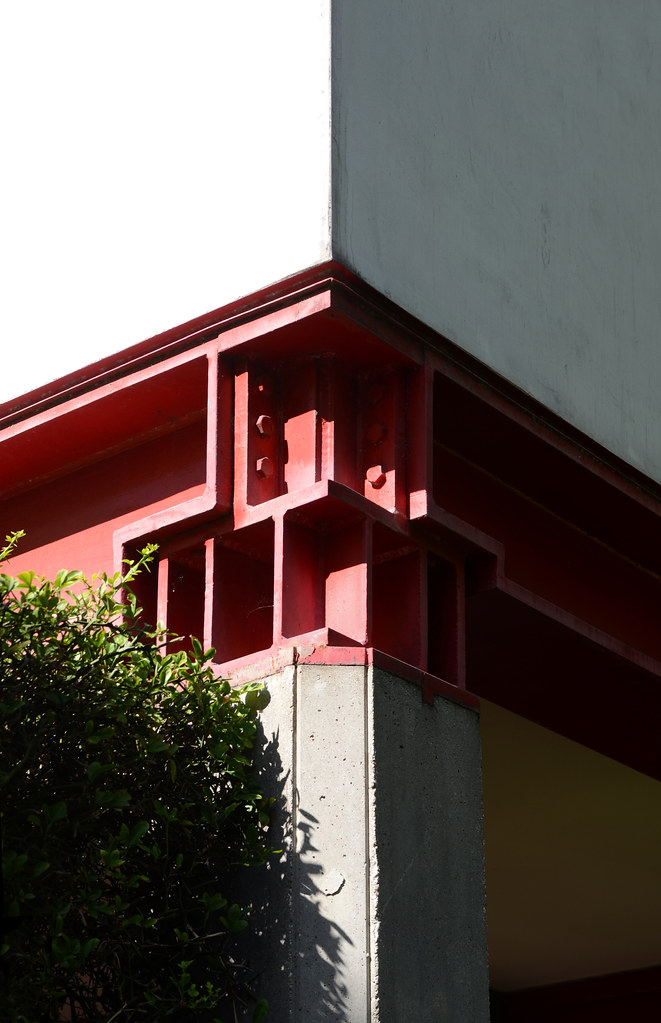
Students at ISAD are taught to consider mood as a design parameter, much like function or structure. Through exercises in material studies, lighting simulations, and spatial sequencing, they learn to manipulate environmental cues to elicit specific emotional responses. The Ahuir340 project, with its emphasis on mood, demonstrates this pedagogical approach. The image may reveal a carefully composed scene where every element—from the choice of materials to the angle of illumination—contributes to a cohesive emotional narrative.
Design is not just about creating spaces; it is about crafting experiences that resonate on an emotional level. Ahuir340 exemplifies this philosophy, where mood becomes the primary language of expression.
Visual Analysis of Image 7
While we cannot see the image directly, its placement in the series suggests a moment of climax or resolution. In many student projects, the seventh image often represents a key view—perhaps the main interior space, a critical detail, or a conceptual diagram. The composition is likely deliberate, drawing the viewer's eye through a carefully orchestrated sequence of forms and voids. The use of color, or its absence, would further define the mood: a monochromatic palette might evoke minimalism and calm, while bold contrasts could suggest dynamism and energy.
The image may also highlight the project's materiality. In design education, the choice of materials is never arbitrary; it communicates texture, durability, and cultural context. Ahuir340 could feature raw concrete, warm timber, reflective glass, or tactile textiles—each telling a different story. The interplay of these materials under specific lighting conditions would create the mood that the project seeks to convey. Image 7, as a visual artifact, encapsulates these decisions in a single frame, inviting close inspection and interpretation.
The Educational Context at ISAD
ISAD, the Istituto Superiore di Architettura e Design in Milan, has long been a hub for creative education. Its portfolio section is more than a showcase; it is a pedagogical tool that allows current and prospective students to see the possibilities of design thinking. The projects displayed, including Ahuir340, reflect the school's curriculum, which balances theoretical foundations with hands-on experimentation. Students are encouraged to develop a personal design language while mastering technical skills.
The fact that Ahuir340 is presented without extensive textual explanation aligns with the school's belief in visual literacy. The images must speak for themselves, demonstrating the student's ability to communicate ideas through form, space, and atmosphere. This approach prepares graduates for professional practice, where the ability to convey a concept visually is paramount. The portfolio thus serves as both a record of achievement and a benchmark for future cohorts.
Connections Within the Ahuir340 Series
As part of a larger series, Image 7 is not an isolated artifact but part of a sequential narrative. Viewers are encouraged to explore the other images in the series to understand the full scope of the project. For instance, Ahuir340 provides an overview, while Ahuir340 - Image 12 may offer a concluding perspective. The earlier images, such as Ahuir340 - Image 2 and Ahuir340 - Image 3, likely establish the initial concepts and spatial explorations. By navigating through the series, one can trace the evolution of the design thinking, from initial sketches to refined presentations.
This sequential viewing is crucial for understanding the project's depth. Each image builds upon the previous, adding layers of meaning and complexity. Image 7, in the middle of the series, may represent a turning point—where the project's core idea is fully realized or where a new direction is introduced. The connections between images highlight the importance of process in design education, emphasizing that a final product is the result of iterative development.
The Role of Student Projects in Design Discourse
Student projects like Ahuir340 contribute to the broader discourse of design by challenging conventions and proposing new possibilities. They are often unencumbered by the constraints of commercial practice, allowing for greater experimentation and risk-taking. This freedom is essential for the advancement of the discipline, as it generates fresh ideas that can later be refined and applied in professional contexts. ISAD's portfolio, by making these projects public, invites dialogue and critique, fostering a community of learning that extends beyond the classroom.
Moreover, the anonymity of the author in the portfolio shifts the focus from the individual to the work itself. This is a deliberate choice, emphasizing that design is a collaborative and cumulative endeavor. The project belongs not just to its creator but to the school, the broader design community, and indeed to anyone who engages with it. In this sense, Ahuir340 is a gift—a visual proposition that asks us to see the world differently.
Conclusion: The Enduring Impact of Ahuir340
Ahuir340 - Image 7 is more than a single frame; it is a distillation of a student's journey through the complexities of design. It encapsulates the essence of mood, the power of materiality, and the rigor of academic training. As part of the ISAD portfolio, it stands alongside other exemplary projects, each contributing to a rich tapestry of creative exploration. For those who view it, the image offers an invitation to pause, reflect, and imagine the spaces and experiences that shape our lives.
The project's legacy lies in its ability to inspire. Future students will look to Ahuir340 as a benchmark of what can be achieved with dedication and vision. Professionals may find in it a spark of innovation that challenges their own assumptions. And for the casual observer, it is a reminder that design is not merely about function but about feeling—a truth that Ahuir340 embodies with quiet eloquence.
Written by ISAD — School of Design in Milan
← Back to blog